Work with me
I build websites and apps for small businesses.
You could build one with AI yourself now. The tools are that good. What I bring is the part that comes first: working out who it's for, what it should always do and what it should never be. Then I build it quickly and put it in your hands, so you can judge it by using it.
Say hello →15 years leading product teams at John Lewis and M&S, on systems handling 20 to 30 million transactions a week. Screenplays optioned in Hollywood. An app on the App Store that I built because my family needed it.
Two questions before anything gets built
What should it always do?
What should it never be?
AI will build whatever you describe, and fill every gap with a guess. The first question tells it where to go. The second stops it wandering off somewhere you'd never want to be. Most people only ask the first.
For a bakery's website, that might be: always show today's opening hours first. Never make anyone download a PDF to see the menu.
One idea, built two ways
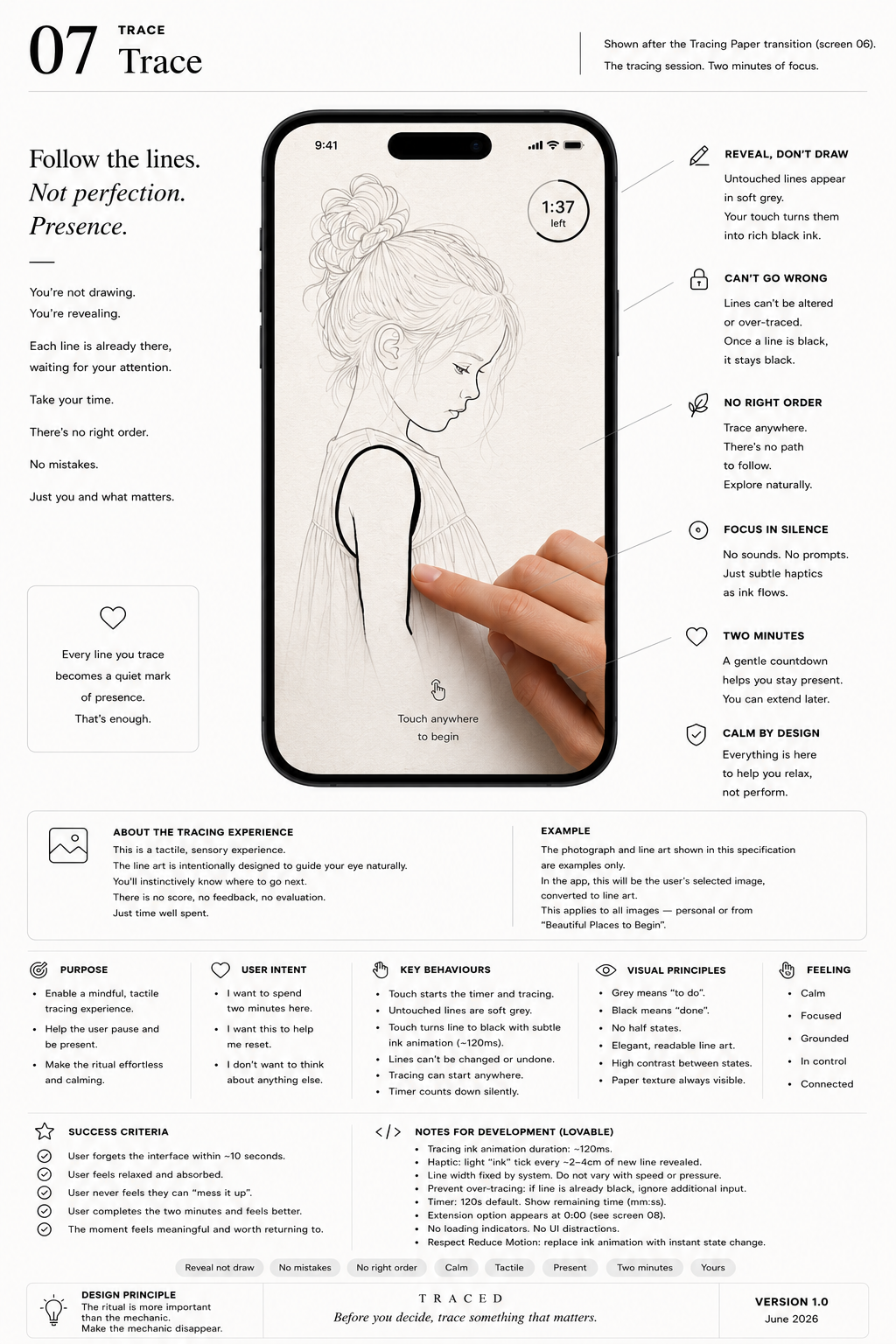
Traced is an app I'm making. You pick a photo of something that matters to you, it becomes a pencil drawing, and you trace it for two minutes before making a decision. I built it twice with the same AI tool.
The five-minute version
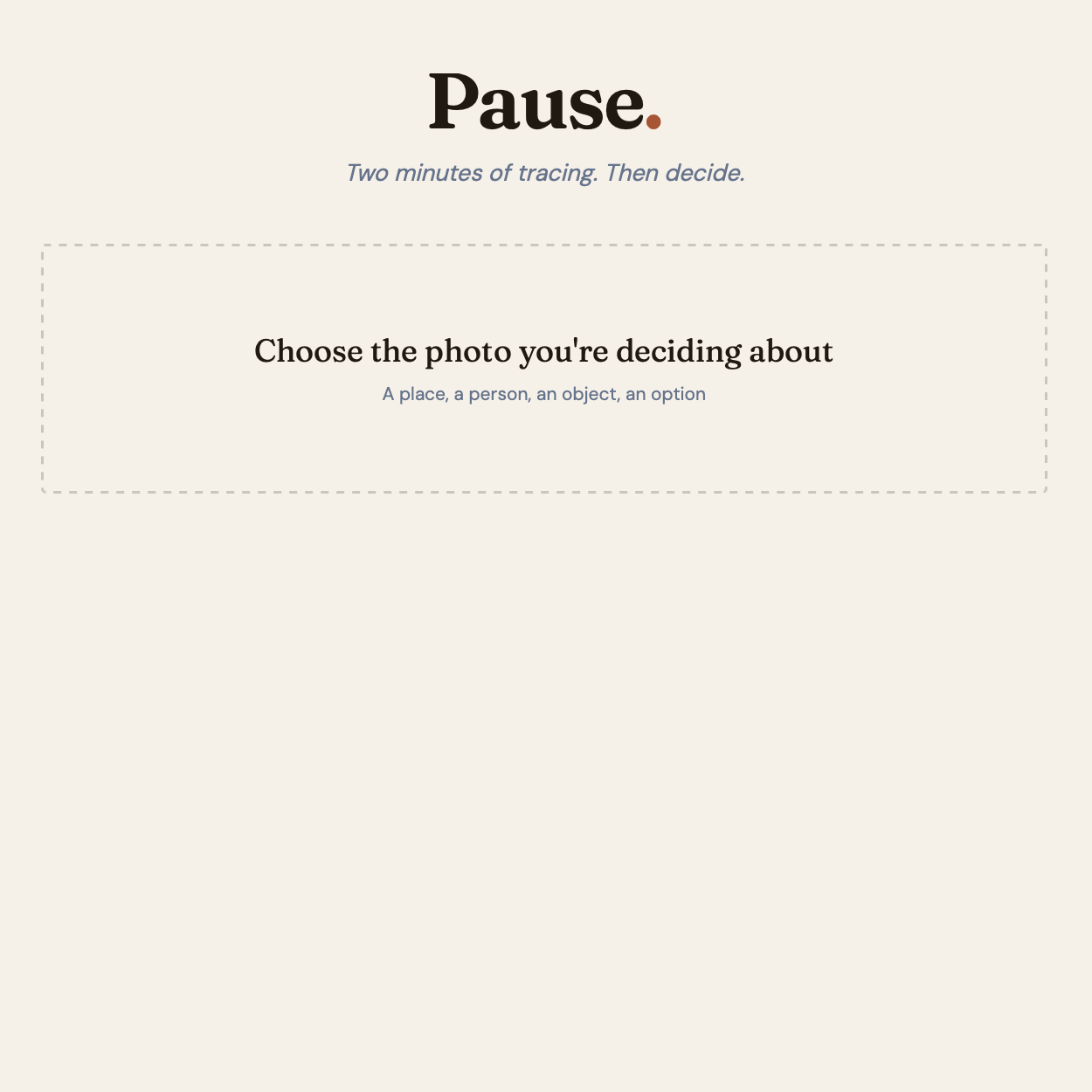
I opened a fresh project and described the idea in a couple of lines. I got back a polished screen called Pause, asking me to "Choose the photo you're deciding about."
It looked finished. But when I tried it, I couldn't do the trace, and it had guessed the idea wrong. The photo isn't the thing you're deciding about. Before replying to a difficult email, I might trace a photo of my daughters. The photo is what helps me pause.
Every wrong guess means another round of fixing. And with nothing written down, the fixes don't stay fixed.
The thought-through version
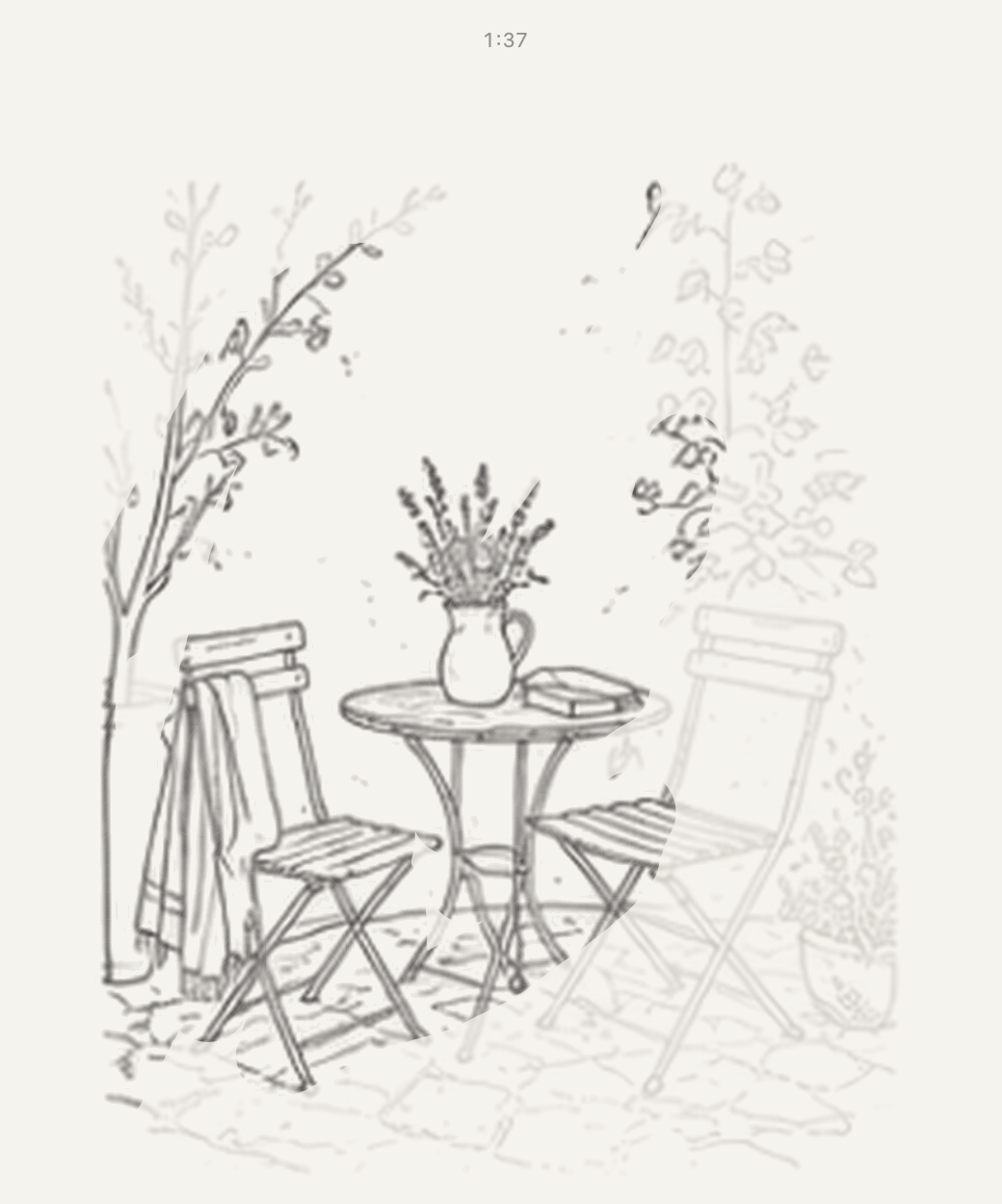
I wrote the brief before I wrote a single prompt. Then I gave the AI one small job first: the tracing, with one drawing, and nothing else.
I'd asked for a pale pencil line that turns to ink under your finger, even if you drift a little, and a drawing that quietly finishes at two minutes. When I tried it, the tracing worked the way I'd intended.
What went into the brief
Before anything else, I wrote down what Traced is for and, just as carefully, what it must never be. No streaks. No badges. No scores. No guilt. No AI coaching. One rule sat above everything: the user cannot fail.
Then I brought AI in the way I'd bring a senior engineer into a team, with a proper brief:
- A constitution: why Traced exists, and a list of things it must never do
- 53 product decisions, each with a reason
- A 12-screen user journey, a design system and a craft guide
- A technical blueprint that gave the AI its role
- A definition of "done"
That came to over 20,000 words before the first prompt. Before building, the AI came back with ten questions, like a new engineer would. I answered every one with a decision.
| The five-minute version | The thought-through version | |
|---|---|---|
| Before building | a couple of lines | over 20,000 words, and ten questions answered |
| What it must never be | never asked | written down first: no streaks, no scores, no guilt |
| Who made the decisions | the AI, by guessing | me, in 53 written decisions |
| The photo is… | the thing you're deciding about | something you love, that helps you pause |
| The tracing… | didn't work | worked the way I'd intended |
Before building
Five-minute version: a couple of lines
Thought-through version: over 20,000 words, and ten questions answered
What it must never be
Five-minute version: never asked
Thought-through version: written down first: no streaks, no scores, no guilt
Who made the decisions
Five-minute version: the AI, by guessing
Thought-through version: me, in 53 written decisions
The photo is…
Five-minute version: the thing you're deciding about
Thought-through version: something you love, that helps you pause
The tracing…
Five-minute version: didn't work
Thought-through version: worked the way I'd intended
AI is part of my team, not the whole team. It builds fast. I decide what it builds, check what it's built, and answer to you.
What you'll see along the way
Your project won't need 20,000 words. A bakery's website might need one page. But it gets the same questions, asked the same way.
- Before:
- We'll talk it through, and you'll get a one-page brief: who it's for, what it must always do and what it must never be. You'll see the words and key screens, and you'll know the price before anything is built.
- During:
- You'll try the most important part early, on your own phone. We'll test it together and I'll note what changes and why.
- After:
- You'll get the files, access to every account and a short guide to making everyday changes yourself. Or I can look after it for an agreed fee.
What it costs
I'm taking on my first ten clients now.
Most websites and apps cost between €599 and €2,999. The price is based on the time it takes me to build.
More complex builds, like loyalty apps or ordering systems, get a bespoke quote. It shows exactly what you're paying for, including any other services your app needs to connect to.
Before you decide, you'll get the scope, the price and any running costs, like hosting or a domain, in writing.
Got something in mind?
Maybe there's something in your business that everyone does the long way, and you keep thinking, "Surely we could make this easier?" Tell me about it. A couple of lines is plenty.
Say hello →Bigfoot will put the kettle on.